
Essential Home Exterior Maintenance for Gulf Coast Owners

TL;DR:
Coastal Alabama homes face accelerated corrosion, mold, and storm damage requiring region-specific maintenance.
Regular rinsing, inspections, and materials like fiber cement siding protect against salt, humidity, and storms.
Proper documentation of maintenance can lower insurance costs and prevent costly repairs.
Living on the Gulf Coast in Alabama is a privilege, but your home pays a price for that coastal lifestyle. Salt air, relentless humidity, tropical storms, and intense summer heat combine to wear down exteriors far faster than anything a homeowner in Ohio or Tennessee would ever face. Generic maintenance advice written for inland homes simply does not hold up here. What works in a moderate climate can leave a Gulf Coast home vulnerable to mold, corrosion, rot, and structural damage within just a few seasons. This guide gives you region-specific, actionable strategies to protect your home’s exterior, preserve your investment, and avoid the costly surprises that catch too many local homeowners off guard.
Key Takeaways
Point | Details |
Salt and humidity damage | Regular cleaning and material choices are essential to minimize coastal weather impacts. |
Storm prep reduces costs | Annual roof and system checks before hurricane season prevent expensive repairs. |
Right materials last longer | Fiber cement siding and proper stucco maintenance protect your investment best in coastal regions. |
Document for insurance | Keeping photos and records of maintenance can lower insurance premiums and speed claims. |
Why coastal homes demand special exterior care
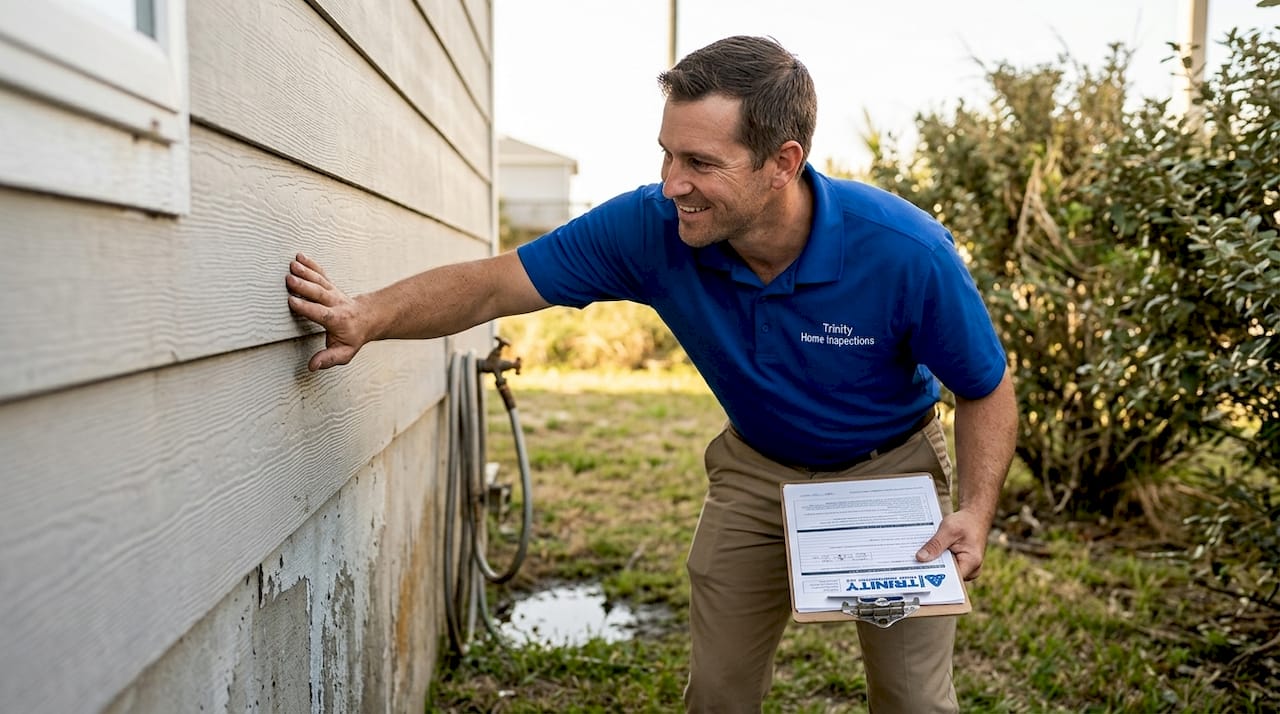
The Gulf Coast environment is relentless. Salt particles carried on the breeze settle onto every exposed surface of your home, from the roof shingles and gutters down to the window frames and HVAC unit sitting beside your foundation. That salt is not just a nuisance. It actively accelerates corrosion on metals, degrades caulking and sealants, and breaks down paint and coatings faster than normal weathering ever would.
Humidity compounds the problem. When moisture levels stay high month after month, organic growth like mold, mildew, and algae finds every unsealed gap, porous surface, and shaded corner of your exterior. Left unchecked, these organisms eat into wood framing, stucco substrates, and siding materials. This is not a cosmetic issue. It becomes a structural one.
Then there is the hurricane risk. The Alabama Gulf Coast sits squarely in hurricane territory, and even storms that do not make direct landfall can deliver wind-driven rain, flying debris, and sustained gusts that expose every weak point in your exterior envelope. A loose soffit panel or cracked flashing that would sit harmlessly for years in a calm climate can turn into a serious entry point for water during a single storm event.
Here is what makes coastal maintenance different from standard advice:
Homes within a mile of the shoreline experience salt deposition at significantly higher rates and require professional attention more frequently than homes farther inland.
Algae, mold, and moisture intrusion risks are dramatically higher than in non-coastal regions.
Delaying or skipping maintenance does not just mean deferred costs. It multiplies them, because damage compounds quickly in this environment.
Documenting every repair and maintenance task with dated photos creates a paper trail that supports insurance claims after storms.
Seasonal checklists prevent 80% of coastal damage claims by catching issues early, before small problems escalate into expensive repairs.
Following a year-round checklist gives you a structured way to stay ahead of deterioration instead of reacting to it. Paying attention to details like crawlspace ventilation tips and drip edge care may seem minor but protects some of the most vulnerable parts of your home’s exterior system.
Routine cleaning and storm preparation: Salt, mold, and hurricanes
Understanding why these steps matter, let’s dive into exactly what to do, when, and how.
Salt buildup is the single most persistent threat to your exterior surfaces in coastal Alabama. When salt deposits accumulate on siding, roofing, gutters, and metal hardware, they attract moisture and create a corrosive environment that degrades materials from the outside in. You might not see the damage happening, but it is constant.
Your basic cleaning schedule should look like this:
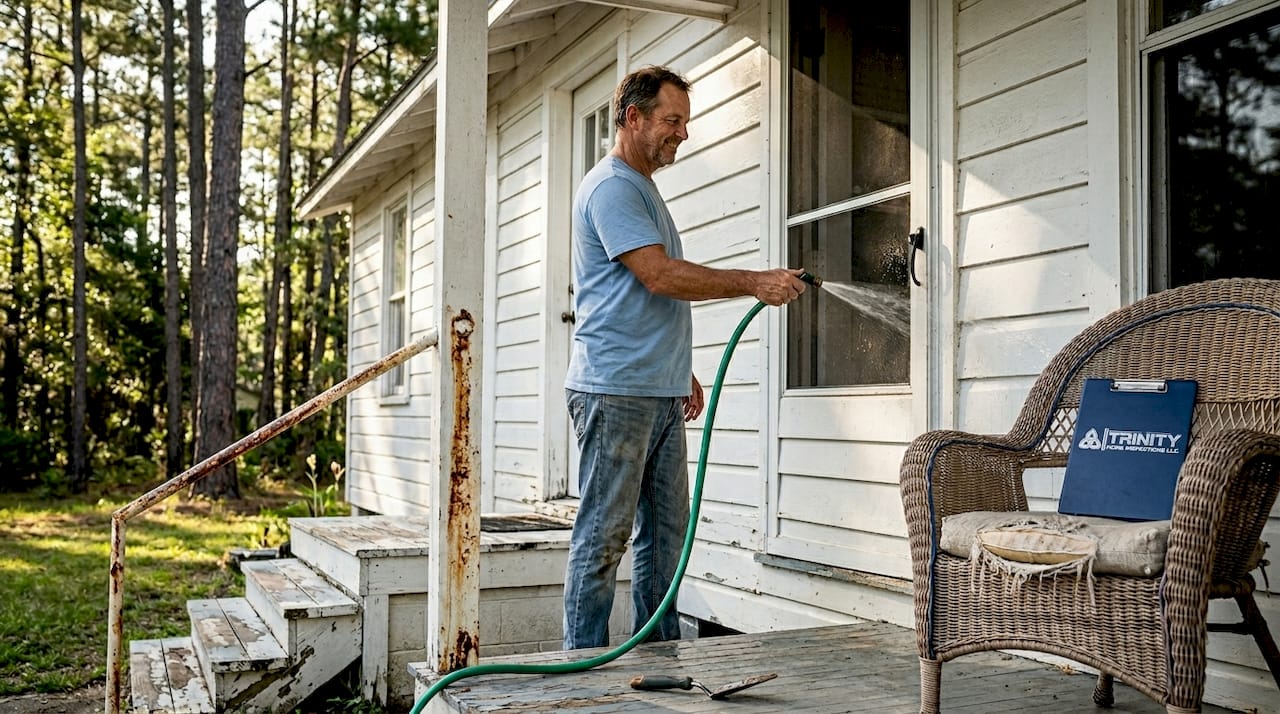
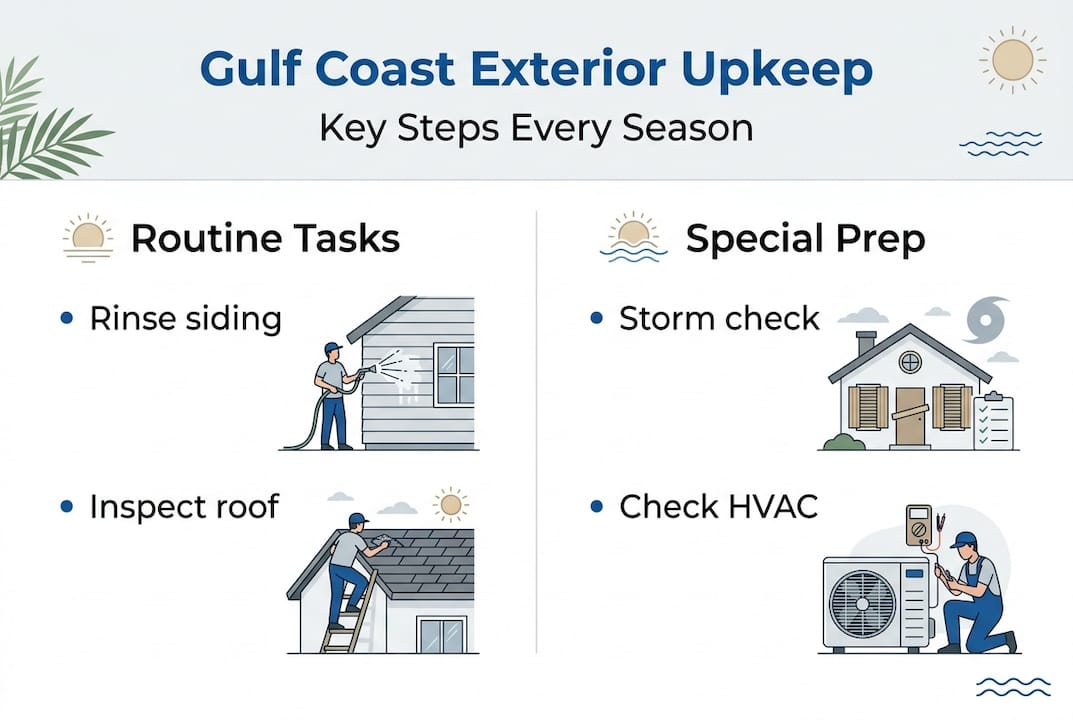
Rinse all exterior surfaces with fresh water every month. Homes within a mile of the shore should rinse every two weeks, especially after windy days.
After any storm, rinse again immediately regardless of your regular schedule, since rinsing after storms removes concentrated salt deposits before they can set.
Inspect gutters, downspouts, and soffits for debris and signs of staining or organic growth every two months.
Apply a mildew-resistant exterior wash twice a year, in spring and fall, to surfaces prone to shading or poor airflow.
Check caulking around windows, doors, and penetrations annually. Coastal UV and thermal cycling break down sealants faster than you expect.
When it comes to cleaning methods, soft washing is almost always the right choice for Gulf Coast homes. Soft washing uses low pressure with a cleaning solution to remove biological growth safely. High-pressure washing can force water behind siding, crack stucco, and damage aging wood. Save the pressure washer for concrete driveways and walkways, not your walls or roof.
Storm preparation is equally critical. Annual roof inspections before June 1st are essential for hurricane prep, and that deadline matters because the Atlantic hurricane season officially begins June 1st. Use these roof inspection tips to know what to look for, and reference a detailed roof checklist to cover every component.
Check shingles for cracking, cupping, or missing granules. Inspect all flashing around chimneys, vents, and valleys. Look at soffit panels for loose fasteners or gaps. Secure or store all outdoor furniture, pots, and decorative items that could become projectiles in a storm.
Pro Tip: Homeowners who invest in a FORTIFIED roof designation often qualify for meaningful insurance discounts in Alabama. The FORTIFIED program through the Insurance Institute for Business and Home Safety sets construction standards specifically designed to reduce wind and water damage, and many Alabama insurers recognize it in their underwriting.
Siding and stucco: Choosing, maintaining, and avoiding expensive mistakes
Alongside good cleaning and storm prep, material choice drives lasting value.
Your siding is your home’s first line of defense against salt, moisture, and wind. Choosing the wrong material or failing to maintain the right one leads to repairs that can run into tens of thousands of dollars. Two materials dominate the Gulf Coast market: vinyl siding and fiber cement siding. Each has a place, but they are not equal in this environment.
Feature | Vinyl siding | Fiber cement siding |
Upfront cost | Lower | Moderate to higher |
Wind resistance | Moderate | High |
Water resistance | Good | Excellent |
Salt air durability | Fair | Very good |
Maintenance needs | Low | Low to moderate |
Repair complexity | Easy | Moderate |
Insurer preference | Neutral | Preferred |
Fiber cement siding outperforms vinyl in coastal Alabama in storm durability and repair rates. Contractors and insurers tend to favor it precisely because it holds up better against wind-driven rain and salt exposure over time. If you are replacing siding or buying a home on the coast, fiber cement is worth the additional upfront investment.
Stucco is common on Gulf Coast homes and presents its own maintenance demands. When properly installed and maintained, stucco is durable and attractive. When neglected, it becomes a source of hidden rot and moisture intrusion that can be very expensive to fix.
Stucco maintenance requires a minimum of 2 inches of ground clearance between the stucco and any soil or mulch, functional weep screeds at the base to allow moisture to escape, elastomeric paint or coating for water resistance, and annual post-storm audits to catch new cracks before water gets in. If your home’s stucco was installed without weep screeds, that is a serious red flag worth addressing with a qualified contractor.
Pro Tip: Use the maintenance checklist to track siding and stucco condition seasonally. Combine that with regular attention to deck maintenance since wood decking faces similar moisture and UV challenges in this climate.
Protecting HVAC and exterior systems from salt and moisture
Beyond siding and roofing, your home’s mechanical systems require special attention.
Your outdoor HVAC unit works harder on the Gulf Coast than almost anywhere else in the country. It runs more hours, battles higher humidity, and sits in an environment where airborne salt settles on its coils, fins, and cabinet. HVAC units near shore are vulnerable to accelerated salt corrosion and benefit from bi-weekly rinsing, stainless steel hardware, and quarterly professional inspections.
The same principle applies to railings, light fixtures, door hardware, and any other outdoor metal feature on your home. Galvanized steel, aluminum, and standard iron all corrode faster in salt air. Upgrading to stainless steel or powder-coated metals where possible, and rinsing exposed hardware regularly, extends their lifespan significantly.
Here is a practical maintenance schedule for your most at-risk exterior systems:
System | Recommended interval | Method |
Outdoor HVAC unit | Bi-weekly rinse | Fresh water, low pressure |
HVAC professional service | Quarterly | Licensed HVAC technician |
Metal railings and hardware | Monthly inspection and rinse | Fresh water, anti-corrosion spray |
Exterior light fixtures | Quarterly | Inspect seals, rinse, check for rust |
Window and door hardware | Every 6 months | Lubricate, inspect, clean salt deposits |
Beyond the rinse schedule, consider these protective measures:
Apply a marine-grade corrosion inhibitor to exposed metal surfaces twice a year.
Replace standard screws and fasteners on exterior fixtures with stainless steel equivalents.
Keep vegetation trimmed back from the HVAC unit to allow airflow and reduce moisture retention around the cabinet.
Log every service visit with date, technician name, and work performed.
Quarterly HVAC checkups may feel like an added expense, but a failed compressor or corroded coil during a July heat wave in Mobile costs far more than preventive service. For more detail, review guidance on protecting HVAC systems and coastal HVAC maintenance. If high winds are a concern in your area, AC tie-down straps are a simple, low-cost upgrade worth considering.
Documentation, insurance, and when to call a pro
Finally, these steps don’t just protect your house. They may also lower your costs over time.
Insurance companies increasingly look at maintenance history when assessing claims and setting premiums. If your home sustains storm damage and you cannot show that you performed regular maintenance and inspections, an insurer may argue that the damage was the result of neglect rather than the storm itself. That distinction can determine whether your claim is paid.
Here is a straightforward documentation system that works:
Create a dedicated folder, either physical or digital, labeled with your home address and the current year.
After every maintenance task, take dated photos of the area serviced and the materials used. A smartphone photo with location data enabled is sufficient.
Keep copies of every contractor receipt, permit, and inspection report. File them chronologically.
Before and after major storms, photograph all exterior surfaces, including the roof if safely accessible, gutters, siding, and any outbuildings.
Record the date and findings of every professional inspection in a simple log. Even a notes app on your phone works if you use it consistently.
Documented maintenance qualifies for wind mitigation discounts, and FORTIFIED roof upgrades can cut insurance premiums in Alabama. That is real money back in your pocket over the life of your homeownership.
Knowing when to stop doing it yourself is just as important as the maintenance itself. Call a professional when you find visible mold covering more than a small isolated area, when you notice soft or spongy wood in structural framing or decking, when interior water stains appear after a storm, or when any cracks in stucco or masonry appear to be growing. These situations go beyond routine upkeep and need qualified eyes. Moisture inspections are especially valuable for catching hidden problems before they escalate.
Pro Tip: Review your insurance policy every year before hurricane season. Confirm your wind and flood coverage limits reflect your home’s current replacement value, not what you paid for it years ago.
What most homeowners get wrong about Gulf Coast exterior upkeep
With these facts out of the way, let’s look at what most advice leaves out in practice.
The most common mistake we see is treating coastal maintenance like a once-a-year project. Homeowners do a spring cleaning, maybe hire someone to pressure wash the driveway, and call it done. Then they wonder why they are facing a $12,000 siding repair or a rotted soffit two years later. The Gulf Coast does not give you that kind of margin.
Another overlooked detail is the interaction between landscaping and your home’s exterior. Mulch piled against stucco walls, overgrown shrubs trapping moisture against siding, and sprinkler heads aimed at the house foundation are all slow contributors to major damage. These are the small habits that add up quietly over years.
Many homeowners also underestimate how much their maintenance records are worth. Not just for insurance purposes, but for resale value. A buyer represented by a sharp agent will ask for maintenance history. A well-documented home with a clear record of professional inspections and timely repairs commands buyer confidence. A home with no records raises questions that can stall or kill a deal.
Our honest advice is to use local maintenance strategies built specifically for this region, schedule professional audits at least once a year, and treat your maintenance log as a financial document. The homeowners who do this consistently are the ones who avoid the big, expensive surprises.
Get expert help with your home’s exterior
Taking care of your Gulf Coast home’s exterior is one of the best investments you can make in its long-term value and your family’s safety. But even the most diligent homeowner benefits from a professional set of eyes catching what routine care can miss.

At Trinity Home Inspections, we serve Baldwin, Mobile, and surrounding Gulf Coast Alabama communities with InterNACHI-certified inspections, free thermal imaging, and same-day reports packed with photos and video. Whether you need mold inspections after a wet season, a pre-sale inspection before listing your home, or a property and permit search to verify a home’s history, we are your one-stop shop. We combine modern tools, regional knowledge, and faith-based integrity to give you a clear, honest picture of your home’s condition. Reach out today and let us help you protect what matters most.
Frequently asked questions
How often should I rinse my home’s exterior in the Gulf Coast area?
Monthly rinsing is recommended for most Gulf Coast homes, and every two weeks for homes within a mile of the shore or after any significant storm event.
Is vinyl or fiber cement siding better for coastal Alabama homes?
Fiber cement outperforms vinyl in storm durability and salt resistance, making it the stronger long-term choice for coastal Alabama homeowners.
What exterior maintenance should I schedule before hurricane season?
Annual roof inspections before June 1st are essential, along with checking all flashing and soffits, rinsing salt from surfaces, and securing or storing any outdoor items that could become wind-driven hazards.
How can maintenance routines lower my home insurance premiums?
Documented maintenance qualifies for wind mitigation discounts in Alabama, and FORTIFIED roof upgrades can produce meaningful premium reductions with many local insurers.
Does salt air affect my outdoor HVAC unit?
Yes, salt corrodes HVAC coils and cabinet materials faster than most homeowners realize. Bi-weekly rinsing, stainless steel hardware, and quarterly professional service are your best protection against early system failure.
Recommended